|
|
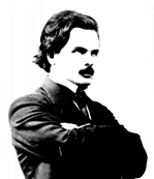
b. July the 7th 1883 in Alavus (the eldest child); parents: sergeant-major in the (Old) Finnish Guard Matti Taikinamäki (military name Kuula) 1854-1921 & Susanna Vehkakoski 1853-1923, married 1879 in Alavus. Matti Kuula (later to be known as an ardent Laestadian preacher) had participated in the so-called Russian-Turkish War (1877) and was enlisted in the garrison of Vaasa at the time of his son's birth
education: the first 5 classes at the Lyceum of Vaasa
father had wished his son to become a priest; however, after leaving the school the son has intentions of a sea-faring career in the autumn of 1899, but falling in love and learning about the experience of a childhood friend returning from a school for organists he finally decides to be a musician
engaged to class-mate Rauha Nelimarkka ("Silja Valo"), summer 1902
1. study period at Helsinki School of Music (now Sibelius Academy) autumn 1900 - spring 03, teachers Viktor Novacek (violin) and Martin Wegelius (theory & composition); no works from this period; had to return to Vaasa because of lack of funding
gave violin & piano lessons; conducted an amateur orch. & Mixed Choir of Worker's Union in 1904
married January the 27th 1905 in Vaasa (1. marriage; lived actually separate since 1907)
a couple of months later (May the 10th) daughter Aune was born but died soon (July the 25th); buried in the old cemetery of Pylkönmäki (monument 1987); father composed to the memory of his daughter the mixed choir song "Tuuti lasta Tuonelahan" and later the solo song "Kesäyö kirkkomaalla"
in late summer 1905 Selim Palmgren became familiar with Kuula's compositions and urged him to continue his studies; because of an official recognition & recommendation by Palmgren, enough funding was raised for Kuula to return to Helsinki
2. study period at Hki School of Music spring 1906 - spring 08 (for ex. as a pupil of J. Sibelius)
met there the singer Alma Silventoinen
collected during the summer of 1907 altogether 262 folk songs & 34 folk dances around the villages of Kauhava, Lapua, Ylihärmä & Kortesjärvi, funded by the South-Ostrobothnian Homestead Society -> facsimile Finnish Literature Society 398
1. composition concert in Helsinki, October 1908
2. compos. conc. Hki, February 1911
study tour to Berlin in spring 1912 & Paris spring 1913
divorced from Silja in April the 22nd 1913 & engaged to Alma
married April the 29th 1914 in Lappeenranta (2. marriage)
daughter Sinikka born in April 1917
founding member of the Finnish Association of Composers in November 1917
d. May the 18th 1918 in Viipuri (County Hospital), having been mortally wounded during the night of May the 1st, shot in the head by a Finnish "Jaeger" on the yard of restaurant-hotel Seurahuone following a quarrel and skirmish in the celebrations of the White Victory, i.e. aftermath of the Finnish Civil War; buried in Hietaniemi old cemetery, Helsinki (Alma also later buried in the same grave); memorial statue (1922) by Alpo Sailo
The death mask of the composer (by A. Sailo 1918) has been in the City Hall of Alavus since 1979 and a memorial statue (by Anu Matilainen) was erected in Kuula Park, Helsinki 1988. Already earlier (1963) statues have been erected in Alavus (by Johannes Haapasalo 1937) & Vaasa (by Väinö Aaltonen). It may be mentioned that the Alavus statue was originally intended for Viipuri.
The 100th Anniversary Memorial Stamp of the composer was released July the 7th 1983
Kuula Musical College was founded in Vaasa 1952
The correspondence of Toivo & Alma (over 700 letters & 600 post cards) has been archived at The National Library of Finland (previously Helsinki University Main Library)
Sheet music published by others: